
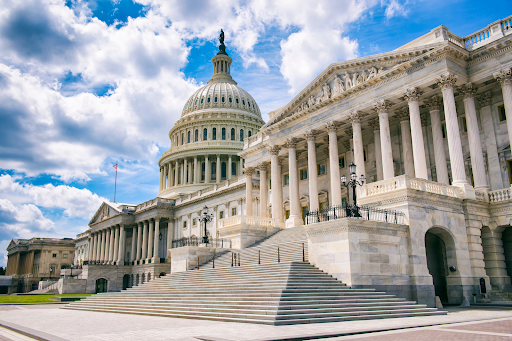
Let’s be honest, when students think of Washington, D.C., the first thing that comes to mind is the White House. And sure, that’s certainly an iconic part of the experience, but there’s a lot more to this city than a picture or two standing in front of the building.
Below are five frequently overlooked D.C. landmarks that students usually find most memorable and why they all deserve a place on your middle school trip itinerary.
U.S. Holocaust Memorial Museum
This one is heavy. No doubt about it. It’s also one of the most transformative visits a student can make on a school trip. The museum doesn’t teach history, it humanizes it through artifacts, personal stories, interactive exhibits. Many teachers I spoke to said this stop leads to some of the most thoughtful post-trip conversations. It’s a learning lesson on empathy, bravery and the value of taking a stand against injustice.
Frederick Douglass National Historic Site
This site is a hidden gem. Douglass’s home in Anacostia creates a physical link to the abolitionist for students. To stand in his study where he wrote and spoke with so much force, is to feel the weight of the impact he had on students. It’s also a good opportunity to show the rest of the United States (and the world) the amazing African American history of D.C., which extends far beyond monuments.
National Archives
You’d like your students to understand the seriousness of American democracy? Put them in front of the Declaration of Independence. The U.S. Constitution. The Bill of Rights. These are the documents that defined our country and they’re right there, behind protective glass, waiting to be viewed. Students know these are not just things in a book. They’re real. And they’re powerful.
Korean War Veterans Memorial
Less clamorous than other monuments, this site has a different impact. The life-size soldiers, trampling through uncut fields of steel and stone, show the emotional cost of war. It’s a silence-inducer for many students. They don’t need a lecture. The memorial is self-explanatory.
National Museum of African American History and Culture
This museum is informative and emotionally powerful. From the traumas of enslavement to the joys of Black culture and achievement, it narrates a story too often omitted from conventional history lessons. It’s contemporary, immersive and personal. Many students emerge changed, inspired, informed, reflective.
Yes, indeed, the Capitol and the White House are incredibly grand. But it’s these places the ones that go deeper, and question, and evoke emotion, that are likely to stay with students the longest. And if your trip is as much about giving students as it is about giving students meaning, these stops belong under your wheels.