
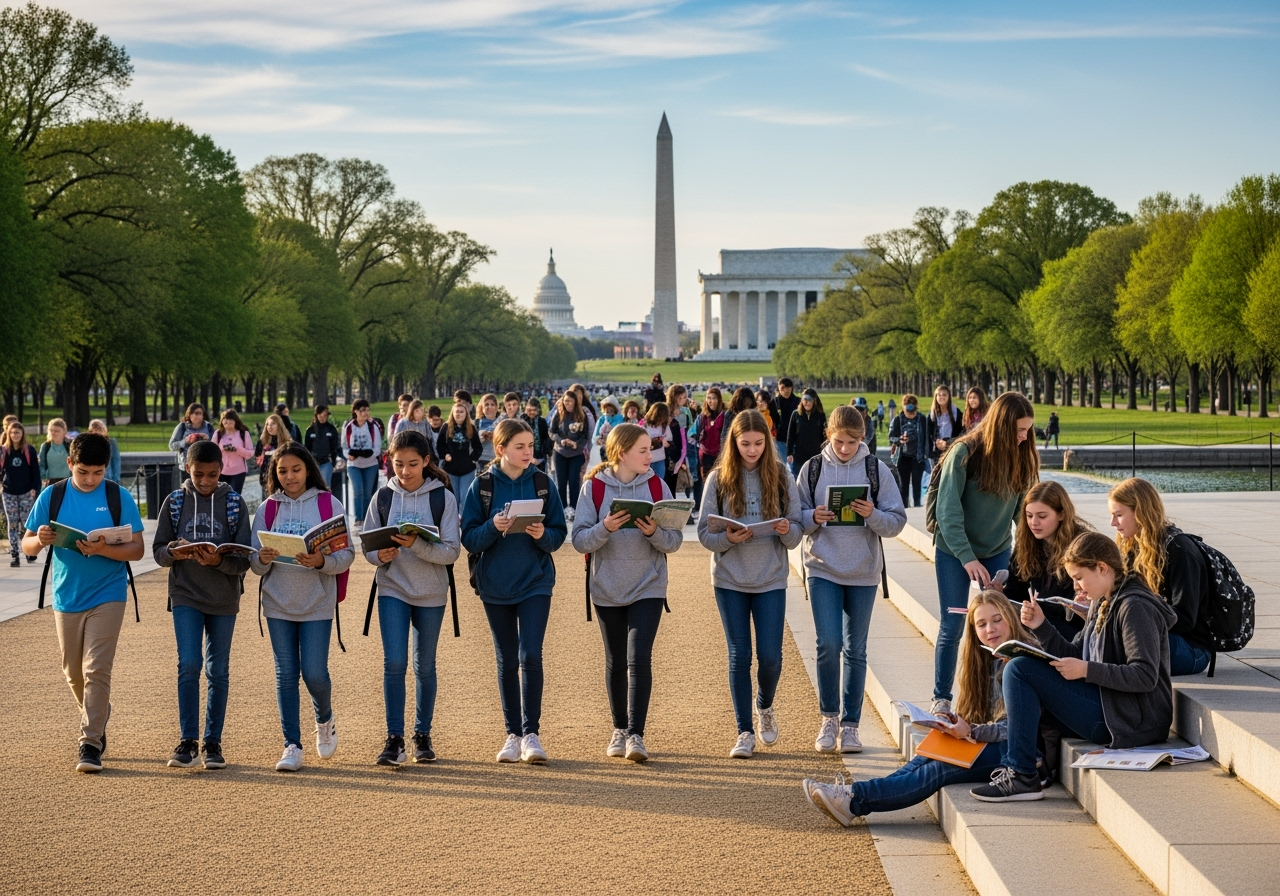
For middle school students who arrive at the National Mall in Washington, D.C., it’s not just a green space they’re walking onto—it’s a living history book. The Mall, from the U.S. Capitol to the Lincoln Memorial, holds many of the nation’s most revered monuments and memorials. But it’s not just the monuments themselves that make the Mall so special—it’s the stories and lessons they tell, waiting to be found.
The Capitol: Democracy in Action
The Capitol, the very center of American government, dominates the Mall’s eastern reaches. For students, the visit to the Capitol is more than just a lesson in architecture—it’s a chance to witness where laws are debated and decisions are made. Teachers often link this stop to civics lessons, and by doing so make democracy real to children rather than an abstraction.
The Washington Monument: A Testament to Perseverance
You can’t miss the 555-foot obelisk, but it may surprise students how this monument came to be. Construction was then halted for decades, first because of financial problems and later the Civil War—which is why the stone shifts colors halfway up. The monument is an affirmation of persistence: patience may be needed to build, but it’s how lasting things are made.
The WWII Memorial: The Power of Ordinary People
Dedicated in 2004, the World War II Memorial does not just remember leaders but people at home and on the front lines who sacrificed. For middle schoolers, it’s a powerful reminder that history is made by ordinary people—men and women who could be their grandparents or great-grandparents—who stepped up to extraordinary challenges.
The Lincoln Memorial
At Lincoln’s feet, students find the legacy of the 16th president and echoes of civil rights history—including Martin Luther King Jr.’s “I Have a Dream” speech. This memorial will offer teachers an opportunity to focus on lessons of leadership and justice, as well as the lasting power of words.
The Reflecting Pool: Rest for a Minute
Between the Lincoln Memorial and Washington Monument, the Reflecting Pool provides a rare moment of serenity on a jam-packed school trip. Encourage students to stop here, look around, them, and reflect on what they’ve learned. The power of silence is sometimes the most impactful.
Tips for Teachers and Chaperones
Plan a Walk: Walking is essential to students’ understanding of how landmarks are related.
Recruit Student Guides: Assign groups to investigate a monument in advance and present it at the site.
Discuss: Have students take notes on which landmark most affected them and what they do about why.
Why the National Mall Matters
To middle schoolers, the National Mall is more than a collection of monuments—it’s a vast stage on which America’s story unfolds and where their own conception of citizenship deepens. Walking on the Mall bridges past and present, turning a sightseeing trip into an important lesson in history.
Every step on the National Mall is a walk through time. Student Adventures can create a complete agenda that changes your students from sightseers into adventurers. Learn more at StudentAdventures.org.