
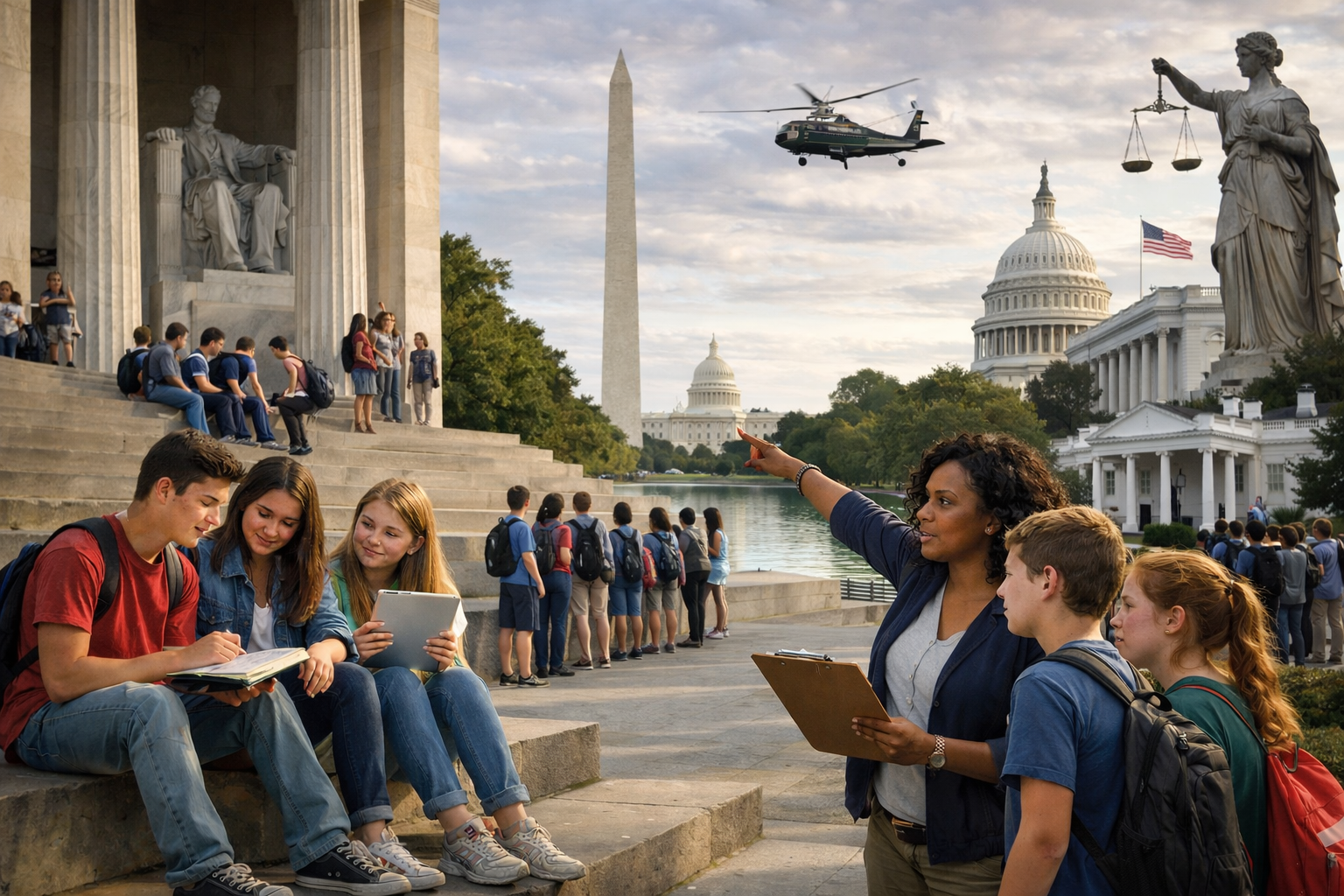
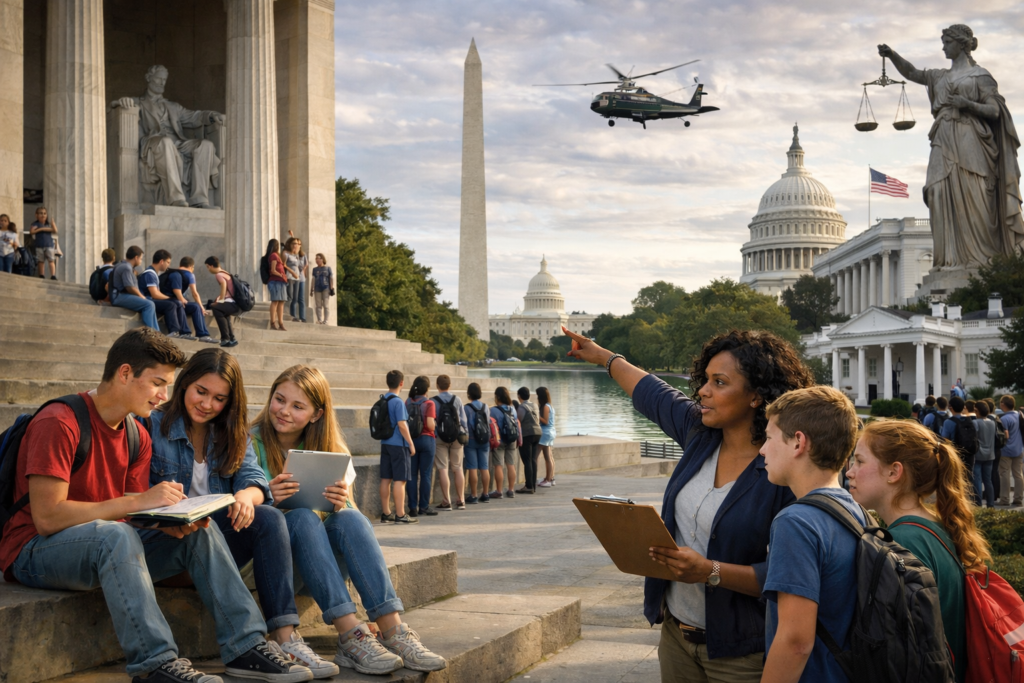
For many students, studying American history and government means reading a textbook, attending lectures, and completing worksheets. Though those tools are essential, they can take us only so far. Washington, D.C., offers something no classroom can: the chance to stand where history unfolded and allows you to witness how the building blocks of our nation still shape our daily lives.
A visit to Washington, D.C. makes those lessons more than just textbook material. When young people stroll along the National Mall, take a tour of the U.S. Capitol, or stand to contemplate a memorial, history ceases to be an account of dates and names and becomes tangible.
Learning History Where It Happened
When students can see an original document, such as the Declaration of Independence or the Constitution, it gives them more context for the ideas they’ve been studying in their classrooms. These are more than just symbols; they are choices made consciously by real people at particularly crucial and progressive junctures in American history. Facing them also raises questions that might not be asked in a traditional classroom setting.
Memorials and monuments add another layer of meaning, deepening that understanding. Students form an emotional connection to historical events through the Lincoln Memorial, the Vietnam Veterans Memorial, and the World War II Memorial. These sites prompt reflection, empathy, and conversation about leadership, sacrifice, and national values.
Civics Comes to Life
The D.C. area is also home to the U.S. government, giving students a chance to understand civics in practice. Visiting government buildings allows students to see firsthand the design of the legislative, executive, and judicial branches rather than studying a diagram in their textbook.
For many students, it is their first real exposure to how laws are made, how policy choices affect daily life, and why civic engagement matters. There is no substitute for being there, and it makes abstractions like checks and balances real and unforgettable.
Encouraging Curiosity and Critical Thinking
And one of the best things a trip to D.C. can do is prompt students to ask questions. Museums, tours, and historic sites encourage students to think critically about past choices and their legacy. Why were certain choices made? To what extent did they affect different groups of people? What lessons still apply today?
This kind of education fosters critical thinking and a more balanced view of history. It also provides an opportunity to discuss current events, leadership, and personal responsibility.
Personal Growth Beyond the Curriculum
In addition to academics, how does a trip to Washington, D.C. promote personal growth? As students move through an active city, track a schedule, and interact respectfully with the public beyond school walls, they develop independence, responsibility, and teamwork. These experiences can build confidence and maturity that are difficult to find in a classroom.
Many teachers report that students return from the trip more engaged, interested, and motivated. The shared experience builds a community among classmates and fosters lasting memories beyond the school year.
An Education They Won’t Forget
Washington, D.C., is more than a place to visit; it’s a living classroom. It’s this blend of history, government, and culture, with reflection, that creates a space where learning feels real. For students, it’s often the point when learning stops being theoretical and starts feeling personal.
And long after the trip, students continue to cite what they saw, how they felt, and what they learned, evidence that experiential learning sticks with them.