
QUICK ANSWER
What is the best way to pack for a school trip by plane?
The best way to pack for a school trip by plane is to utilize a carry-on suitcase for clothing and a small personal backpack for travel day essentials. Students must ensure their backpack contains all necessary travel documents, medications, electronics, and a change of clothes in case the airline requires the main suitcase to be checked at the gate. All liquids must comply with the TSA 3-1-1 rule and be easily accessible for security screening.
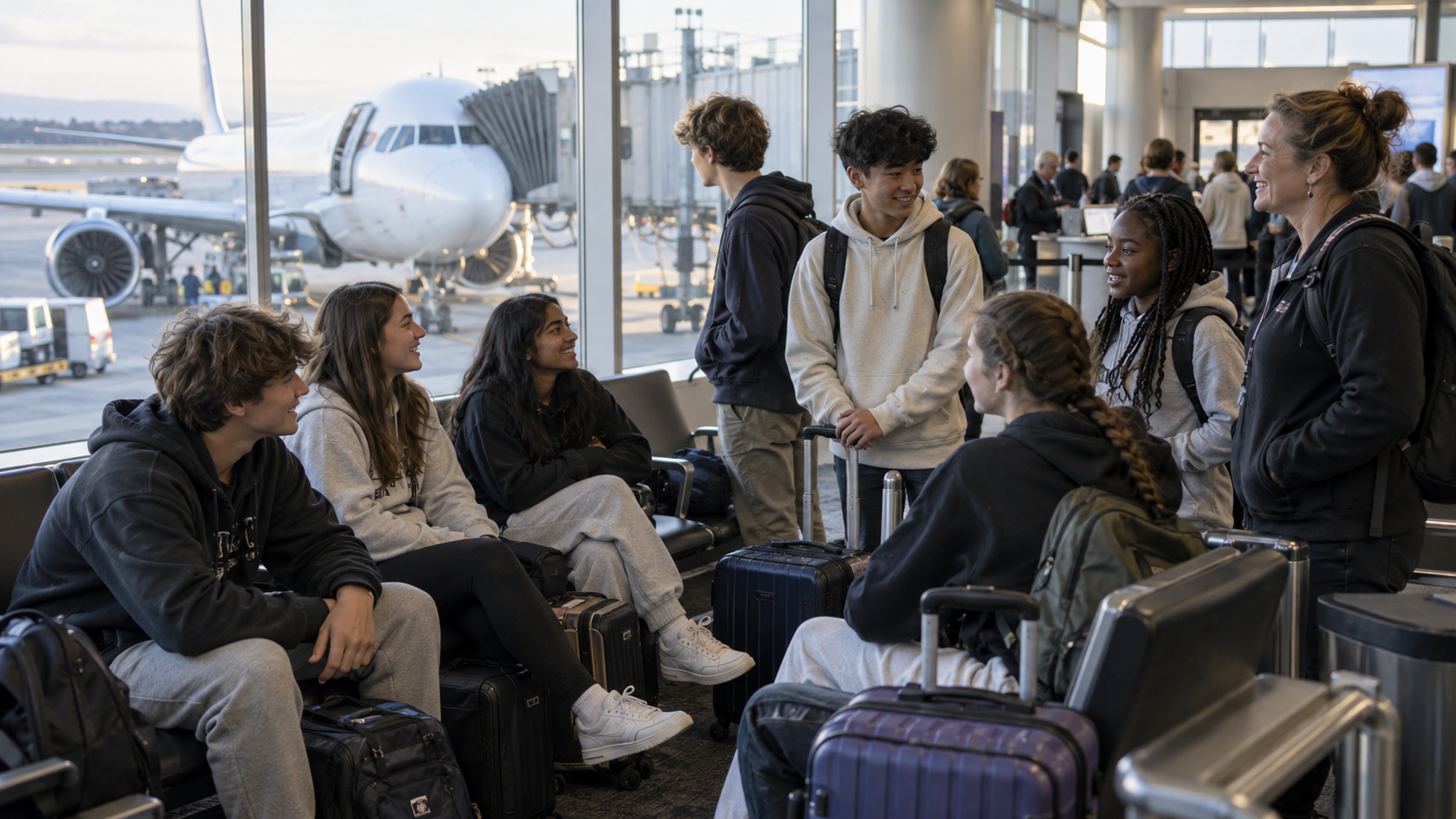
A school trip that starts at the airport can feel like a massive milestone, especially for a first-time flyer. Packing thoughtfully helps students arrive ready for the adventure with fewer last-minute surprises at the check-in counter or the security line.
At Student Adventures, we generally encourage participants to avoid checking a bag. Packing with a carry-on suitcase and a small personal backpack keeps belongings close, avoids waiting at baggage claim, and heavily reduces the chance of arriving without your luggage. Here is how to pack perfectly for the friendly skies.
1. Plan to Travel with Carry-On Luggage
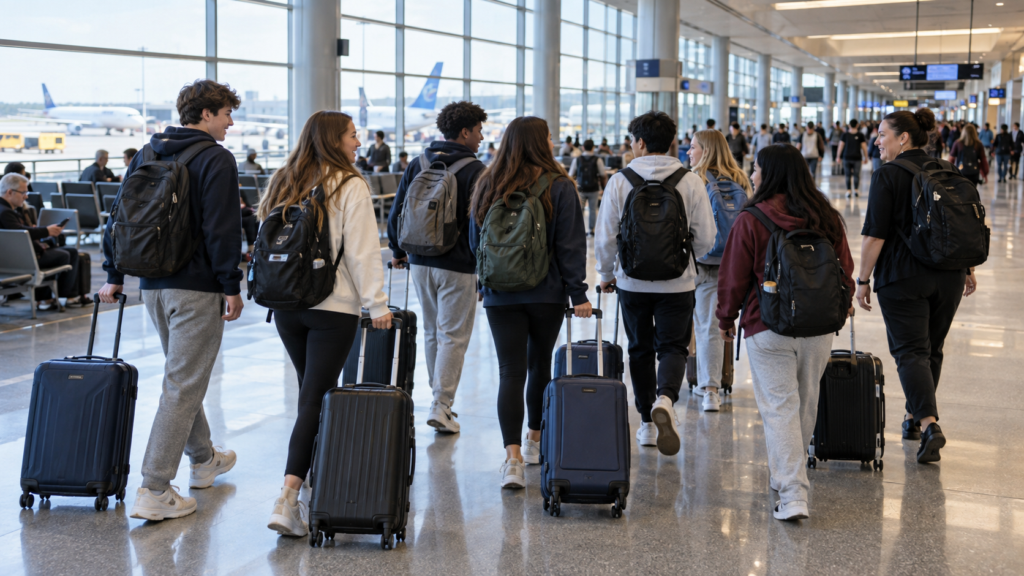
Start with a compact carry-on suitcase for clothing and toiletries, plus a small backpack for daily essentials. The suitcase should meet the airline’s overhead bin limits, and the backpack must fit beneath the seat in front of you. Always ask your trip organizer about size limits, weight limits, and whether an overhead carry-on is included in your specific reservation before you begin packing. Leave a little room for the return trip, because your souvenirs still have to fit within that exact same baggage allowance.
2. Keep Your First-Day Essentials in the Cabin
Give each bag a specific job. Clothing and most toiletries go in your carry-on suitcase, while travel day essentials stay in your backpack. Even when you plan to carry everything onboard, the airline may run out of overhead space and ask you to check your suitcase at the gate. Keep anything you cannot comfortably do without in the personal backpack that stays with you. This includes required travel documents, essential medications, a change of clothes, your phone, headphones, and an empty refillable water bottle.
3. Pack Toiletries for Airport Security
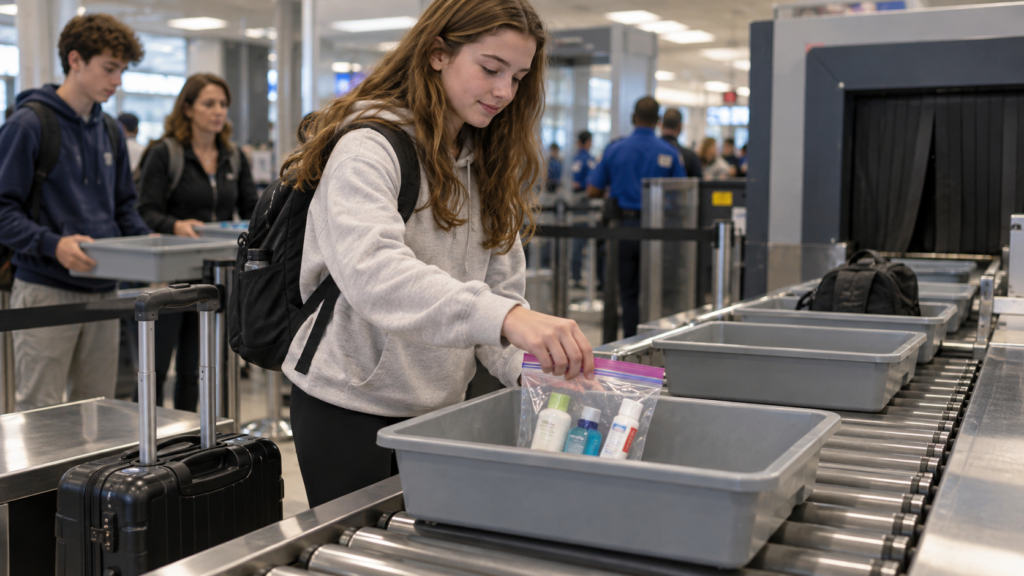
For flights departing from U.S. airports, prepare all ordinary carry-on liquids, gels, creams, and aerosols according to the TSA guidelines. Each container must hold no more than 3.4 ounces, and all containers must fit inside one clear, quart-size, resealable bag. Keep this bag easily accessible at the top of your backpack and follow the officers’ instructions at the checkpoint. Remember that medical liquids have separate screening provisions, so families traveling with them should coordinate with the school before travel.
4. Put Portable Chargers in the Right Bag
Power banks and spare lithium batteries belong in carry-on baggage, not in checked luggage. If an airline takes your carry-on suitcase at the gate to put it in the cargo hold, you must remove all power banks and spare lithium batteries first. It is highly recommended to move your medication, travel documents, and valuables into your personal backpack during that last-minute transfer as well.
5. Check Identification Before Departure Day
For travel within the United States, the TSA does not typically require children under 18 to provide identification, but airlines may have their own requirements. Travelers age 18 and older must bring an accepted form of identification, such as a passport or a compliant driver’s license. Always confirm what specific documents your student needs with the trip organizer and the airline well in advance.
Ensure your student is perfectly prepared for takeoff.
Knowing what to bring, and exactly where to pack it, helps students start their trip feeling confident and ready. For more details on baggage plans, financial information, and our complete travel checklists, visit the Parents & Students Travel Essentials page on the Student Adventures website today.